|
|
||||
|
|
||||
|
The US Lost
Measles Elimination |
||||
|
Author: Katelyn Jetelina , PhD, MPH NOTE: This article was originally published on November 18, 2026 by Your Local Epidemiologist on Substack. Welp, it’s official. The U.S. has lost its measles elimination status, setting the country back roughly 26 years. While losing this status is largely symbolic (it doesn’t trigger penalties, sanctions, or lost funding), it boils down to one simple, incredibly depressing thing: more preventable suffering. Depending on where you live on the internet, you’re likely seeing messages that teeter between “no one can have a baby right now” and “measles isn’t a big deal.” As always, both miss the nuance about what it actually means. So here’s what this means for you (and the country), what it doesn’t, and what it’ll take to crawl out of this hot mess.
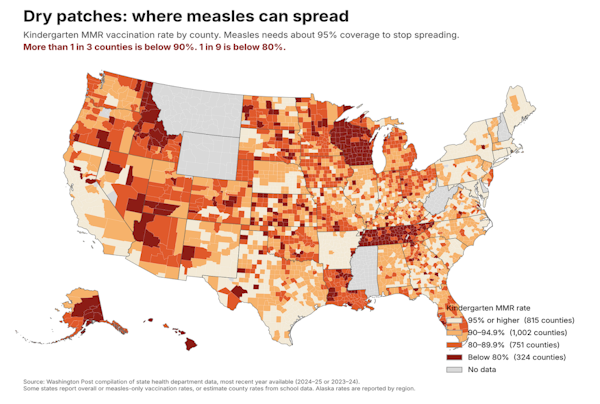
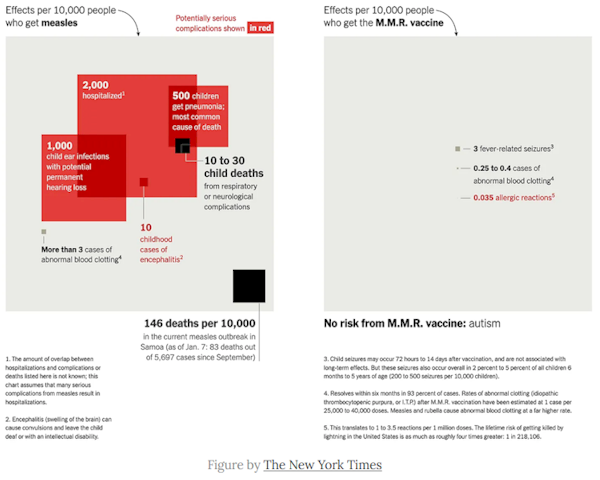
What it means (for the country) ♦ Measles is spreading here on its own again. Think of it like a forest fire. For nearly 26 years, the U.S. was mostly green and damp because vaccination rates were high. Sparks occasionally flew when someone traveled abroad and brought measles back (not from illegal immigration), but those sparks landed on wet ground so they fizzled. Now the forest has dried out in patches, communities where vaccination has decreased dramatically. When a spark lands there, it spreads like wildfire because this is the most contagious virus on earth. The embers are thrown into the next dry patch, and the next. Losing elimination status means fire has been burning somewhere in the country for over a year. ♦ This happened for one simple reason: vaccination rates have fallen in too many communities. We can see this from two main angles: iVaccines and prior immunity continue to work. Outbreak data from local health departments show 90-95% of cases are among unvaccinated or under-vaccinated. iVaccination rates are slipping. Fewer kindergarteners are getting vaccinated, and more people are opting for school vaccine exemptions. According to a database The Washington Post compiled, more than 28% of counties are below a 90% MMR vaccination rate. (We need 95% for herd immunity) ♦ More people will suffer, especially kids. Those dry patches of forest will lead to more frequent, longer outbreaks. This means more rashes, yes, but also more preventable illness, hospitalizations, health care costs, and school absences among the unvaccinated. And this typically affects the most vulnerable:
This pales in comparison to the vaccine’s risks. ♦ This has happened because of a myriad of factors, some brewing for decades and some new:
What it means (for you) Know if you might need another dose. Adults born before 1957 are generally considered immune. (They were exposed to “natural” infection.) People vaccinated What it means (for you) ♦ Measles is not everywhere, but stay informed. It’s not like the flu, which you can get at any grocery store. It is still concentrated in these pockets of the “forest.” But depending on where you live (and the hyperlocal vaccination rates of your county or school), an outbreak may be coming soon. Sign up for notifications from your local health department. Your school may send notifications, too. Also ask about your local vaccination rate. ♦ If you’re up to date on your vaccines, you are very well protected. Really, truly. This doesn’t have to be one of the top 10 things you worry about. A breakthrough case is rare (3 in 100) and much milder. The vaccine stops between 1963 and 1967 may have received a less effective vaccine and should ask their doctor about another dose. If you don’t have records, it may make sense to just get another vaccine. 10 FAQs on MMR and Measles Protection ■ |
||||
|
|
||||