|
|
|
|
|
|
|
Health equity is
caught in the crossfire |
|
|
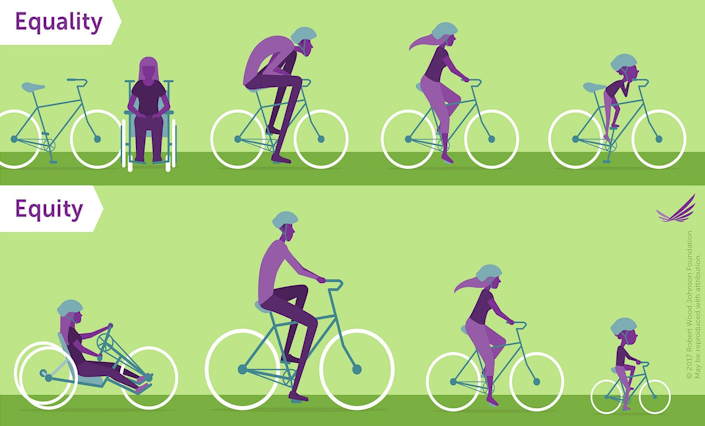
Author: Elisabeth Marnik, PhD NOTE: This article was originally published on September 30, 2026 by Your Local Epidemiologist on Substack. “I’m just going to run to the grocery store!” How many times have we said this without thinking about it? For most of us, it's usually an easy walk or a short drive to get the cheese we forgot. In reality, though, 13% of the U.S. population (about 39 million people) live in “food deserts,” which means living more than a mile from a grocery store in urban areas and more than 10 miles in rural areas. This was the case for people in Pittsburgh’s Hill District, where a quick run to buy food wasn’t an option. In the 1930s, federal maps marked the Hill as "hazardous" for lending, a practice known as redlining that steered investment away from Black neighborhoods. Decades of disinvestment followed, and residents went about 30 years without a nearby grocery store. This made it hard to keep healthy eating habits and contributed to chronic disease. When a grocery store finally opened in the area in 2013, researchers saw the opportunity and launched the PHRESH study, which initially compared the health of participants from the Hill district to those in the Homewood district. Over time, the study expanded to other factors such as brain health and Alzheimer's risk. Residents like Roderick Blair overcame initial hesitation to share their health data, trusting it would benefit their neighborhood. Then, in August 2026, the NIH abruptly canceled the study’s grant, citing that it was “subjective” and fell outside their scientific scope—an effect of the administration’s interpretation of diversity, equity and inclusion (DEI). Research like PHRESH can help determine what changes in a neighborhood actually improve health, so cutting it has left that question unanswered. Other canceled studies have examined health issues like maternal health, preterm birth rates, or sickle cell disease. Courts have reversed some of these grant cancellations, but not all of them. If we really want America to be healthier, research into why some communities get sicker than others is absolutely critical. The law that created the federal minority health research institute passed with bipartisan support in 2000. But these days, as evidenced by grant cancellations, the political shift in attitudes toward DEI means we often lose access to the health information we need to help all communities thrive. DEI vs. health equity vs. equality and the overlap (or lack thereof) The letters “DEI” evoke very different reactions depending on who you are in the U.S. DEI programs can address gender, disability, age, and other factors, but the fiercest debate centers on race. For some people, hearing DEI brings to mind policies that may have cost them a job or a college seat because they are white. Others see DEI as a matter of justice: a way to expand representation and opportunity for groups that have been historically marginalized. Both perspectives are rooted in lived experience, and both center on the same question: whether hiring and admissions practices are fair. Hiring and admission practices, though related, are not the same as health equity. Health equity is “the attainment of the highest level of health for all people.” It’s the recognition that some groups of people consistently experience worse health outcomes than others. For instance, black mothers die from pregnancy-related complications at three times the rate of white mothers, and rural Americans are more likely to die from issues such as heart disease and cancer. Equity is also often conflated with “equality,” which leads to misunderstanding of how to actually best support communities. Equality ignores the fact that we aren’t all starting life with the same resources or circumstances, whereas equity is about helping people get what they specifically need based on their situation so they have the chance to achieve the same outcome as anyone else. For example, if every household in Pittsburgh got a $30 grocery gift card, that would be equal. But during the decades the Hill District went without a grocery store, that card wouldn’t have helped much. Equity means making sure everyone can actually access a store in the first place. DEI policies can overlap with health equity in many ways. For example, they may help expand access to quality education and stable, well-paying jobs, which in turn can provide health insurance, safer housing, and improved finances—all of which can reduce health disparities. But to make that happen, we first need data to identify disparities in communities and to develop solutions that effectively address them. What we lose when the research stops Community data is important to health equity because: You can’t fix what you don’t see: Data show which communities are most affected by health factors such as infection, heart disease, and cancer. If we don’t know what is happening and where, then we can’t develop interventions to help. Poor health costs everyone: Chronic disease is expensive—both to the individual person and to the overall economy. Understanding what groups of people are most at risk allows us to develop interventions that can save everyone money. Disparities exist for many communities: Health equity includes disparities that exist due to a whole host of factors, such as family background, race and ethnicity, rural vs. suburban residence, gender and sexual orientation, veteran status, disability, and lower income. This means many Americans can benefit from research into differences in health outcomes and how to improve them.
Trust is easy to lose: Some participants in the PHRESH study were initially vocal about their concerns about participating. But that trust was earned because the researchers kept their promises and centered their work on the community. When projects are canceled mid-cycle, researchers have no choice but to leave behind communities they had promised to help. This hurts trust in the long run. It’s also a very inefficient use of resources, and it will take significant time and effort to redo the work when the government realizes this work is important again. How should we talk about health equity? This is hard because the words “equity” and “DEI” are currently very politically charged. So whether you’re a public health professional, teacher, or friend, how we talk about this topic matters. The right framing can help people who might otherwise be skeptical see why health equity research is important and deserves funding. Here are some suggestions to help your conversations:
Bottom line Some communities end up sicker than others. That’s just the facts. We can argue about the best way to do that research, but canceling it simply because it may be linked to DEI doesn’t make anyone healthier. It just leaves communities like the Hill district behind. And in the end, it causes us all to move backward in our efforts to improve health in this country. ■ Big thanks to MacKenzie Isaac & Legairre Radden, who reviewed this piece and generously shared their expertise and lived experience to help improve it. |
|
|
|
|